Game of Kings:The Blood Throne
- 4.5
- Rating
- 1.00M
- Installs
- Free
- Price

 Analysis by App-foxy
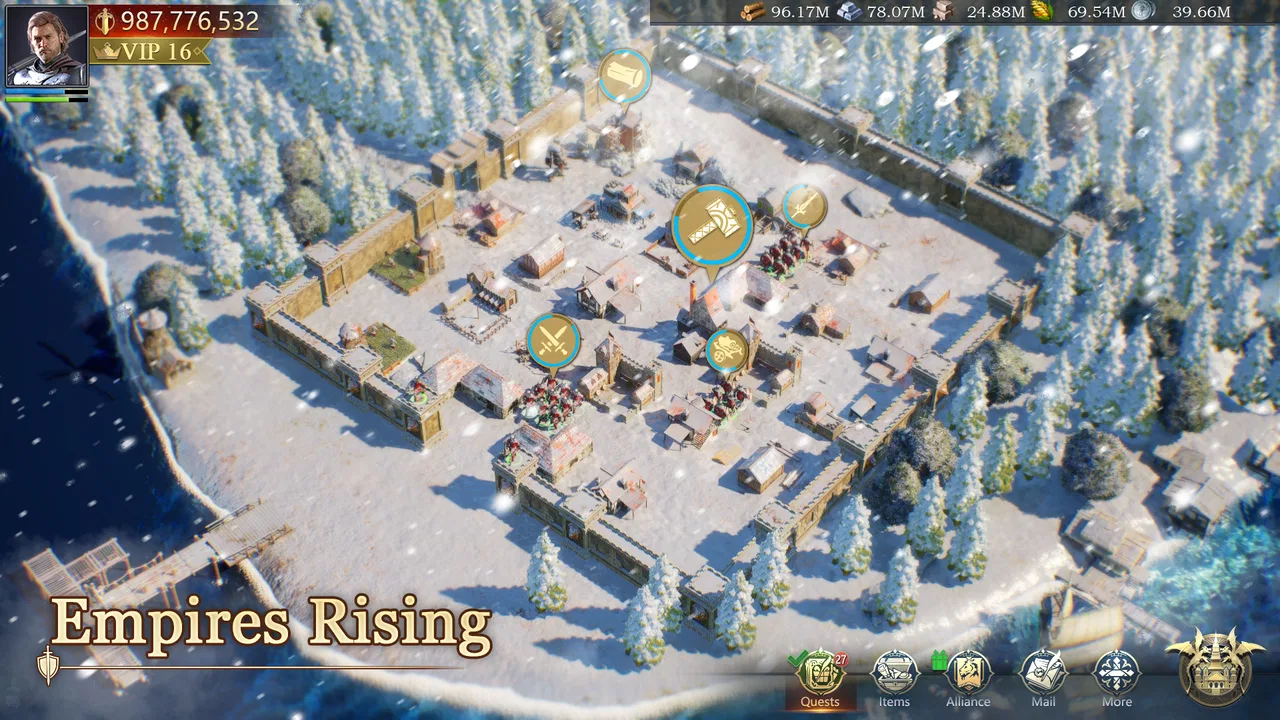
I went into Game of Kings:The Blood Throne expecting a familiar medieval strategy game, and that is exactly where its first strength appears: it is easy to understand why the game feels inviting during the opening sessions. You build toward power, make decisions about a kingdom, and take part in an online war setting where progress feels connected to other players rather than locked inside a purely solo campaign. The basic fantasy is clear without needing much explanation.
After spending time with it, though, I found that the more important question is not whether it can entertain you for a few evenings. It can. The real question is whether its routine remains satisfying once the first excitement of expansion and competition starts to settle. My answer is cautious but positive: it can earn a regular place on your phone if you enjoy planning around gradual progress, but it is not a good fit for anyone who wants a self-contained strategy game with quick conclusions and little upkeep.
Why the first week feels so approachable
The opening appeal comes from the game’s combination of a recognizable medieval setting and multiplayer strategy. You are not simply solving isolated puzzles or moving pieces through a short campaign. Your choices are framed as part of a larger struggle for influence, which gives even ordinary progress a sense of purpose. That makes a short session feel more meaningful than a disconnected round of a casual game.
You May Also Like

 Blood Strike: 2.5 Anniversary
Blood Strike’s Loadouts Turn Every Drop Into a Tactical Gamble
A close look at Blood Strike’s custom loadouts: how fast access to signature weapons reshapes its battle royale rhythm, rewards preparation, and narrows the gap between fights.

 Pandora - Music & Podcasts
Pandora’s Music Is Easy to Start, but Harder to Recover
Pandora’s strength is its low-effort path from a seed to a station. Its weak spot is how much confidence it asks you to place in connection, setup, and quiet recovery.

 8 Ball Pool
 Is Built on Rivalries, Rematches, and Routine
A close look at the rivalries, rematches, shared routines, and unanswered safety questions that turn a quick pool match into a persistent mobile community.

 Samsung Music
’s Quiet Strength Is Playing What You Already Own
Its reach comes less from spectacle than from dependable access to a personal library. That simplicity is both the app’s strongest retention engine and its ceiling.

 AccuWeather: Weather Radar
AccuWeather Review: A Quick, Clear Forecast for Everyday Decisions
For everyday plans, the best forecast is the one you can understand quickly. AccuWeather makes rain timing, radar, and local conditions easy to act on, with a few trade-offs.

 Hill Climb Racing
Why Hill Climb Racing Still Turns Crashes Into One More Run
A tiny car, a bumpy hill and one more upgrade: Hill Climb Racing keeps resurfacing because its simple chaos makes every near-miss feel personal.
More From Our News Desk



I also appreciated that the central goal is easy to keep in mind. The idea of becoming the supreme ruler gives the game a strong direction, even when the individual tasks involve smaller improvements. A good strategy title needs that long-term reason to care, and this one communicates it more clearly than many games that bury their purpose under layers of menus.
During the first few days, the steady stream of decisions creates a pleasant rhythm. I could check what needed attention, make a choice, and leave with the feeling that the kingdom had moved forward. That loop is especially effective for players who enjoy games that reward returning rather than demanding one long uninterrupted sitting.
There is also a useful distinction between playing for atmosphere and playing for mastery. If you mainly want a medieval backdrop with online competition, the game gives you that quickly. If you want to become genuinely effective, you need to pay closer attention to how you spend time and resources. That second layer is where the strategy becomes more interesting, but it also takes patience.
A practical tip from my early sessions is to avoid treating every available improvement as equally urgent. The temptation is to upgrade whatever is immediately visible, because each action produces a satisfying sense of movement. I found it more useful to decide what kind of player I wanted to be first: someone focused on steady development, someone interested in confrontation, or someone who simply enjoys checking in and making small gains. That choice helps prevent scattered progress.
The game is free to start, which makes experimenting straightforward. Its content rating is Teen, so families should still consider whether the online war theme and competitive atmosphere suit the intended player. On compatible devices, the minimum operating system is Android 6.0, making it accessible to people using older Android hardware, although the experience will naturally depend on the device itself and how comfortably it handles a persistent strategy game.
The first-week habit is the real hook
What kept me returning during the first week was not a single spectacular feature. It was the anticipation of the next useful action. Strategy games often succeed when they make you curious about what will happen after one more improvement, one more decision, or one more return visit. Game of Kings:The Blood Throne understands that habit well.
That habit can fit neatly into everyday life. Imagine checking the game during a morning commute, making a few decisions before work, then returning in the evening to review the result and prepare the next step. It works better in that kind of broken-up routine than in a situation where you expect a complete story arc in one sitting. The game’s appeal is built around continuity.
My advice is to establish a simple check-in routine instead of opening it whenever you feel bored. Decide what you are trying to accomplish before each visit, even if the goal is modest. This keeps the game from becoming a stream of aimless taps and makes its strategic choices easier to evaluate.
What remains valuable after the novelty fades
Once the initial excitement wears off, the game’s value depends on whether gradual planning is enjoyable in its own right. For me, the strongest long-term element is the sense that progress has to be managed rather than merely collected. A player who likes weighing one improvement against another will find more to think about than a player who only wants constant action.
The online setting also gives the game a reason to remain relevant. Multiplayer strategy is naturally less predictable than a fixed campaign because the surrounding competition changes how progress feels. Even when your personal routine is familiar, your position within a wider contest can make the next decision seem more important.
That said, online presence alone does not guarantee lasting variety. A game can have other players and still become repetitive if the daily decisions stop feeling meaningful. In my experience, the long-term value here comes from setting personal objectives. You might focus on becoming more efficient, building a stronger position, or learning when not to spend valuable resources. Without those self-imposed goals, the routine can feel like maintenance rather than strategy.
One of the more useful trade-offs is that patience can matter as much as cleverness. Players who are comfortable letting progress accumulate will generally get more from the game than players who expect every session to deliver a dramatic change. This is not a title I would recommend as a replacement for a fast tactical game. It is better understood as an ongoing project that you revisit.
The game is free, but optional purchases range from $0.99 to $99.99 per item. That range matters when deciding whether the experience suits you. A careful player can approach the game as a free hobby, but anyone who dislikes the pressure associated with optional spending should establish a personal limit before becoming invested in the kingdom’s progress. I consider that a sensible precaution for any free-to-play strategy game, especially one built around long-term advancement.
I would also avoid judging your enjoyment solely by how quickly you gain strength. A slower route can still be satisfying if you are learning the game’s priorities and making deliberate choices. Spending may change the pace, but it does not automatically create the kind of judgment that makes a strategy game rewarding. The best reason to continue should be that you like managing the situation, not that you feel compelled to catch up.
Who gets the most from the monthly routine
This is a good choice for someone who enjoys medieval themes, online competition, and games that can be revisited in short bursts. It suits players who like watching a position develop over time and who do not mind that progress is not always dramatic. If you already enjoy checking a strategy game several times across a day, the structure should feel familiar rather than demanding.
It is less suitable for a player who wants a polished one-time adventure, a purely offline experience, or a strategy game that can be mastered in a weekend. I would also steer away from it if you become frustrated by waiting for longer-term progress or by the possibility that other players influence the atmosphere. The multiplayer setting is part of the attraction, but it also means the game cannot be judged like a private puzzle.
Compared with a traditional turn-based strategy title, this game is more about maintaining a position over time than completing a clean sequence of battles or scenarios. Compared with a quick mobile tactics game, it asks for more patience and more willingness to return later. Those differences are important: the best alternative depends on whether you want a lasting routine or a finished match.
Where the maintenance starts to show
The main burden is the need to remember the game. Ongoing strategy games reward regular attention, and that can turn from a strength into an obligation. If you miss several check-ins, you may return feeling that you are catching up rather than making progress. I did not find the maintenance overwhelming, but I did find that the game is more enjoyable when I approached it on my own terms instead of trying to respond to every possible interruption.
A useful workflow is to group your attention. Rather than opening the game repeatedly without a plan, I would review the kingdom, identify the most important decision, and stop once that decision was made. This reduces the chance of spending time on low-value actions simply because they are available. It also makes the game feel more strategic and less like an endless checklist.
Another source of friction is the difference between visible progress and meaningful progress. An upgrade or improvement can look satisfying while doing little to solve the problem you actually face. I learned to ask what the action changes for my next session, not just whether it increases a number or fills a progress bar. That small mental habit makes the experience less wasteful.
The current version is 2.0.131, and the game comes from LIGHTNING STUDIOS. Those details are useful when checking compatibility and identifying the correct product before installing, particularly because mobile stores can contain similarly themed games. The title has been available since Apr 2, 2016, so it is not a brand-new experiment; its appeal is tied to the established style of persistent medieval strategy rather than launch-day novelty.
I also recommend deciding in advance how much attention you want to give the game each day. Without that boundary, a persistent strategy title can quietly occupy more mental space than its short sessions suggest. A ten-minute visit may be harmless, but repeated checking can make the game feel like another obligation. The best experience comes when the game fits your routine instead of dictating it.
What can cause fatigue over time
The first fatigue point is repetition. A loop that feels comforting in the beginning can become predictable when every return follows the same pattern. The solution is not necessarily to play more. In my case, taking a break and returning with a specific objective worked better than forcing another routine session.
The second is competitive comparison. Multiplayer strategy encourages you to measure your position against others, but that can weaken the enjoyment if every session becomes a judgment of whether you are ahead or behind. I found it healthier to compare my current decisions with my earlier ones. That kept the focus on learning rather than on an impossible need to dominate every moment.
The third is spending pressure. The free entry point is welcome, but the presence of purchases means players should remain conscious of why they are paying. If a purchase solves a genuine convenience problem within a budget, that is one thing. If it is being made because falling behind feels uncomfortable, I would stop and reconsider. Long-term enjoyment is difficult to maintain when progress becomes a source of financial anxiety.
There is also a personality issue. Some players enjoy a game more when it gives them a clear ending. This one is better for people who like an evolving project. If you prefer to finish a campaign, see credits, and move on, the ongoing structure may feel less rewarding than a conventional strategy alternative.
One non-obvious advantage of the persistent format is that it gives you room to improve your decision-making gradually. You do not need to understand every priority immediately. You can use early mistakes as information, then adjust your routine. The corresponding weakness is that the learning process may feel slow if you want immediate feedback. That is the central trade-off running through the whole experience.
My long-term verdict
After the first-week excitement, I think Game of Kings:The Blood Throne earns lasting space only for a particular kind of player. It is not the most convincing choice for someone searching for a compact strategy game with a clear finish. It is much more appealing to someone who enjoys checking a medieval kingdom, making measured decisions, and watching a competitive position develop over time.
The game has a solid foundation: a clear medieval identity, an online strategy focus, and a routine that works well in short sessions. Its average rating is 4.5 from around 47 thousand ratings, while its total installs have passed one million, so there is clear evidence that the format has connected with a substantial audience. I would treat that popularity as a reason to investigate, not as a guarantee that its maintenance-heavy structure will suit everyone.
My strongest recommendation is to begin with a deliberate experiment. Play without assuming that you must spend, set a realistic check-in schedule, and pay attention to whether the decisions remain interesting after the first rush of progress. If you enjoy that slower rhythm, the game can become a dependable mobile strategy habit. If you find yourself opening it only to avoid falling behind, the novelty has already stopped working for you.
For me, the lasting value is real but conditional. The game rewards patience, planning, and a willingness to live with gradual change. It asks for more upkeep than a traditional match-based alternative, and its optional purchases make self-control important. Still, when I wanted a medieval multiplayer strategy game that could occupy small spaces in the day rather than demand one long sitting, it gave me a worthwhile reason to return.
My final advice is simple: try it as a long-term routine, not as a quick campaign. If that idea sounds appealing, the free entry point makes it easy to see whether the kingdom-building loop belongs in your regular rotation. If you want immediate battles, a fixed ending, or no ongoing pressure at all, your time will probably be better spent with a more contained strategy game.
FAQs for Game of Kings:The Blood Throne
01What is Game of Kings: The Blood Throne?
Game of Kings: The Blood Throne is a mobile strategy game focused on kingdom building, resource management, military expansion, and alliance-based competition. You develop a city, research technologies, train different types of troops, and compete with other players for territory and influence. The game combines long-term progression with timed events, quests, battles, and political decisions that keep the experience active beyond simply upgrading buildings.
02Can I play Game of Kings: The Blood Throne offline?
No, the game is primarily designed as an online multiplayer experience and requires a stable internet connection for most of its important features. Your progress, kingdom data, events, alliances, and battles are connected to the game servers. Although some menus or previously loaded information may appear briefly without a connection, you should not expect full offline gameplay or reliable progress while disconnected.
03Is Game of Kings: The Blood Throne free to play?
The game can generally be downloaded and played for free, but it includes optional in-app purchases. These purchases may provide premium currency, speed-ups, resource bundles, cosmetic items, or other advantages that reduce waiting times and support faster progression. Free players can still build and improve their kingdoms, although advancing competitively may require more patience, careful planning, and regular participation in events and alliance activities.
04Does the game require joining an alliance?
Joining an alliance is not always mandatory at the beginning, but it becomes highly recommended as you progress. Alliances can provide assistance with construction and research timers, shared rewards, strategic advice, protection, and access to cooperative events. Playing alone is possible, but players who avoid alliances may have a harder time defending their kingdom, collecting event rewards, and competing against organized groups.
05Is Game of Kings: The Blood Throne suitable for beginners?
The game is accessible to beginners because its early missions and guided objectives explain the main systems, including construction, troop training, research, and resource collection. However, the number of menus, timers, currencies, events, and upgrade paths can feel overwhelming at first. New players should focus on completing objectives, protecting resources, improving the economy, and choosing upgrades carefully instead of spending premium currency impulsively.
Pros
- Large-scale kingdom battles offer plenty of strategic depth.
- Alliance features make cooperation and diplomacy important.
- Regular events provide new objectives and rewards.
- The medieval theme is detailed and visually appealing.
- Multiple upgrade paths support different play styles.
Cons
- Progress can feel slow without frequent play or resource spending.
- The interface may seem overwhelming for new strategy players.
- Competitive rankings can favor players with larger budgets.
- Battles often rely on preparation rather than direct control.
- The game requires a stable internet connection to play.

Game of Kings:The Blood Throne
Gallery